Hookups in Denver run on a rhythm that surprises people who arrive from the coasts. The city that markets itself on mountains, trails and 300 days of sun spends its nights in a surprisingly compact set of neighborhoods, and the same person who was on a trail at 8 AM is at a brewery in RiNo at 9 PM. The casual dating scene in Denver lives in that second half of the day, and it is denser and more walkable than the sprawling metro suggests.
This guide covers where the casual crowd actually concentrates in 2026, how the core-versus-suburbs split shapes the plan, what the seasons do to a city with real winters and a long outdoor summer, how apps fit a metro full of transplants, and the safety routine that works here.
How people meet in Denver
Denver is a transplant city. A large share of the people in their twenties and thirties arrived in the last decade for tech, outdoor-industry, healthcare and energy jobs, plus the graduate and undergraduate populations from the universities in University Park, Auraria downtown and Boulder up the highway. That produces a social scene where almost everyone is still building a friend group, which makes Denver friendlier to strangers than most cities its size. People talk at breweries. Trail groups, run clubs, climbing gyms and rec-league sports are real ways people meet here, and they function as a daytime social layer that most cities do not have.
The limit of that layer is that it produces friends faster than it produces casual dates. The run club is a great place to meet people and a strange place to signal that you want something casual tonight. The brewery is social but it is a place people go with their group. Apps are how Denver's daytime friendliness turns into a nighttime plan: the person you would never have approached at the climbing gym has a profile that says what they want, and the app filters by distance so the plan stays inside the walkable core.
The Denver pattern locals describe is app first, then a public meet in one of the neighborhoods below, then the rest. The daytime scene is context, not the main channel.
The neighborhood map for Denver hookups
Four neighborhoods carry most of the casual scene. They sit close together on a map, which is the good news, but they have different crowds and different peaks.
RiNo
River North, just northeast of downtown, is the nightlife district. Breweries, distilleries, cocktail bars in converted warehouses, music venues, murals, food halls, and a crowd that is mostly mid-twenties to mid-thirties, going out to go out. It runs later than the rest of the city on weekends and it is one of the few Denver neighborhoods where walking between venues along Larimer and Walnut is normal. Parking is a fight, ride-shares are the default, and the light rail at 38th and Blake gets you in from the north side. For a same-night plan with someone who is already downtown or in the core, RiNo is the obvious choice.
LoHi
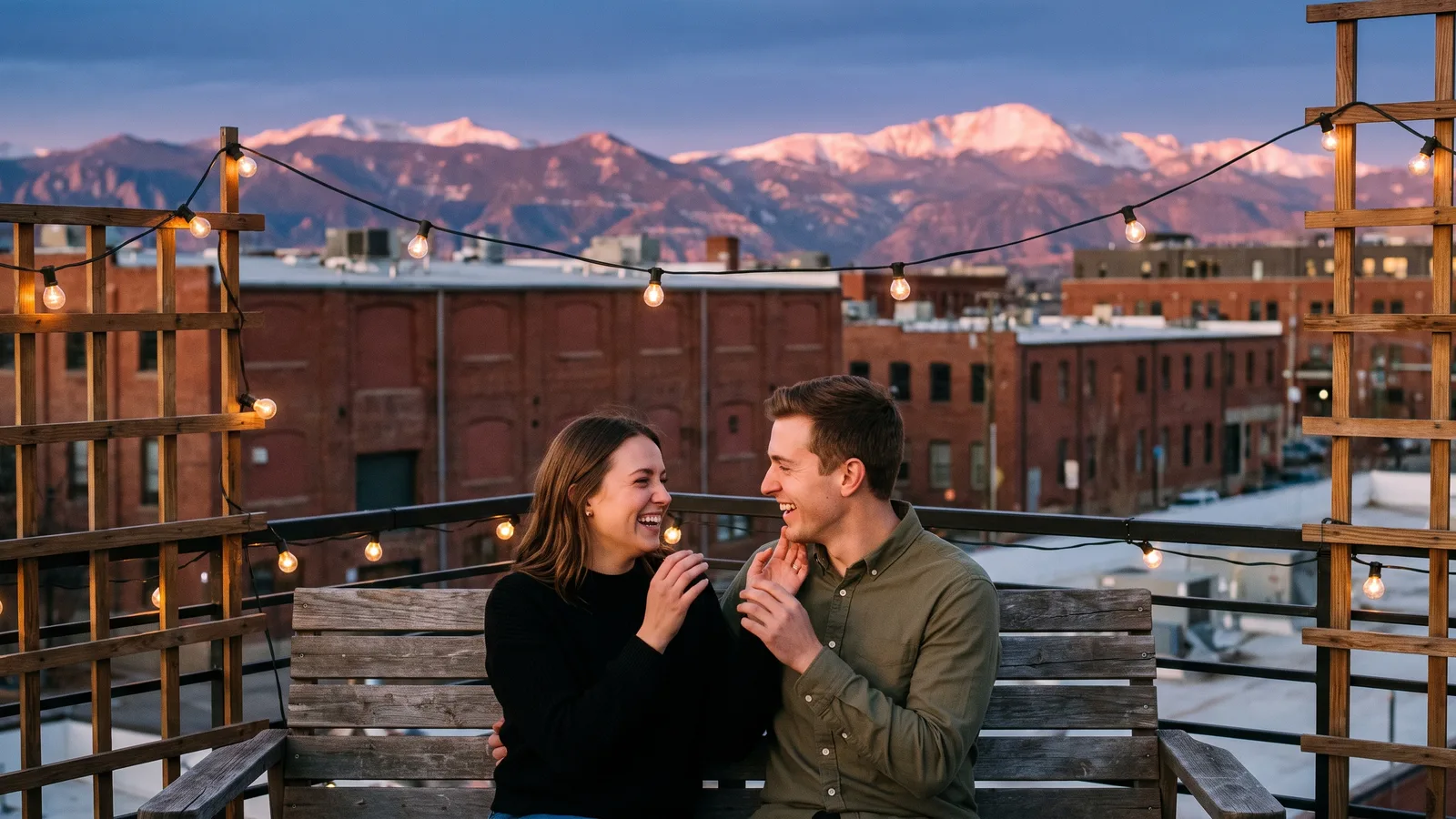
Lower Highland, across the river from downtown and up the hill, is the polished version. Rooftop bars with skyline views, wine bars, upscale restaurants with patios, and a young-professional crowd in their late twenties to late thirties who live in the new apartment buildings nearby. It is walkable to Union Station over the pedestrian bridge, which makes LoHi one of the only nightlife areas in Denver where two people from opposite sides of the core can meet without a car. It peaks earlier than RiNo. First meets here tend to be one drink on a rooftop and a decision by 10 PM.
Capitol Hill
Capitol Hill, east of downtown, is the dense one. Old apartment buildings, a large population of students and people in their early-to-mid twenties, dive bars, cocktail bars, coffee shops, a lively LGBTQ+ scene along Colfax and the streets south of it, and the highest walkability in the city. Cap Hill is where a "let's meet at the bar on the corner" plan actually works, because the bar is on the corner and both people live within ten blocks of it. It runs every night of the week, not only weekends. If you live in or near Cap Hill, set your distance filter to two miles and you will not need to widen it.
South Broadway
South Broadway, running south from downtown through the Baker neighborhood, is the dive-bar and live-music strip. Vintage shops by day, bars, small venues, late-night food and a crowd that is younger, more alternative and less scene-conscious than LoHi. It is a good first-meet strip because the venues are close together, the prices are lower than RiNo, and the format of "one bar, then walk a block to the next" is built in. It connects to Cap Hill and to the Baker and Wash Park residential areas, which hold a lot of the crowd.
The rest of the metro
Downtown and LoDo have the big sports bars and the Union Station scene, busiest on game nights. Highland and Berkeley to the northwest are calmer and older. Cherry Creek is the upscale shopping-and-dinner district, more second-date than first-meet. The suburbs, from Lakewood and Aurora to Littleton and Arvada, hold most of the metro's population and a lot of people who never come into the core on a weeknight. Boulder is a college town 30 miles up the highway with its own scene, and a Denver-to-Boulder same-night plan is not a real plan.
The core-versus-suburbs radius
Denver's core, meaning RiNo, LoHi, downtown, Cap Hill, Baker and South Broadway, fits inside a circle about three miles across. Almost all of the same-night casual scene is inside that circle. The metro around it is 40 miles across and largely car-dependent.
That makes the distance filter simple if you live in the core: set it to two or three miles and you cover everything that matters. If you live in the suburbs, the honest question is whether you are willing to drive into the core on a weeknight, because the reverse almost never happens. A match in Lakewood and a match in Aurora are on opposite sides of the city, and both of them are a real drive from RiNo after 10 PM.
The light rail helps on a few corridors and the bus network is thin at night. For a plan that involves drinking, ride-shares are the default and both people should have their own. Decide your ride home before you leave.
Seasons in Denver
Summer is the long peak. From late May into September the patios, rooftops and beer gardens are full every evening, the sun is up until nearly 9 PM in June, and the outdoor social layer is at its strongest. Weeknights in summer are unusually good for casual plans because the whole city is out.
Fall is short and sharp. September and early October bring the best weather of the year, the students are back, and the neighborhoods above are at their busiest. The first snow can arrive in October and the outdoor layer shuts down quickly after that.
Winter is real. The going-out scene continues, but the walk from the car or the train to the bar becomes a factor, and casual plans work best when both people are within a few blocks of the same venue. Ski season also pulls a large share of the population out of the city every weekend from December through March, which makes winter weeknights better than winter weekends for same-night plans.
Spring is unpredictable, with warm days and snowstorms trading places through April. The first reliably warm weekend in May functions as an unofficial city-wide going-out event.
How apps fit the Denver scene
Denver has a large and active dating-app population, driven by the transplant churn and by a metro layout that makes organic meeting easy in daylight and hard at night. The mainstream generic apps produce a lot of matches and a lot of conversations that stall, either because the profiles never said what either person wanted or because the two people were on opposite sides of a 40-mile metro.
Two features solve most of that. A distance filter set to the core rather than the metro, and intention tags, where a profile states up front whether the person is here for tonight, for something casual, for FWB or for something longer. Flava is a casual dating app built around those two levers, with selfie-verified profiles, anonymous registration and Pokes that let you message before matching. Whichever app you use, the Denver method is: tight radius, tag overlap, a specific neighborhood in the first message, and a video check before anyone gets in a ride-share.
The peak activity window is 9 to 11 PM on most nights, and in summer it starts later because the sun does. For the full same-night method, the how to find a hookup tonight guide is the long version.
First-meet formats that work in Denver
The brewery or rooftop drink. One drink at a brewery in RiNo or a rooftop in LoHi, 30 to 45 minutes, and an honest conversation about what happens next. Public, casual, easy to leave, and the Denver default.
The Broadway crawl. Meet at one bar on South Broadway, walk a block to the next, maybe catch part of a show. It gives both people time to decide, and it stays public the whole way.
The late-summer walk. In warm weather, meet for a drink and then walk along the river path near Confluence Park or through Cheesman Park on the edge of Cap Hill while it is still light. Denver's long summer evenings make this a genuine format, not a cliché.
What does not work: a plan that requires one person to drive in from the suburbs and the other to drive out, a dinner reservation for someone you have not video-checked, or "come over" as the first meeting. Denver rewards a short, specific, one-neighborhood plan.
The safety layer in Denver
Denver's friendliness is real and it is also why the routine matters: it is easy to trust a stranger here faster than you would in a bigger city. A short in-app video call before you commit. One friend told which neighborhood and which bar. Live location shared for a few hours. A public first meet, always. Your own ride-share both ways rather than getting into anyone's car, especially in winter when the walk home is not an option.
Never move money for any "verification," "safety ID," ride deposit or gift card. Keep the conversation in-app until the video check is done. Talk about what you both want before anyone's apartment becomes the plan, and be honest if the answer is "tonight only." The hookup etiquette guide covers the conversation, and how to stay safe on dating apps is the longer version.
Frequently asked questions
Which Denver neighborhood is best for hookups? RiNo for the late-night brewery and warehouse scene, LoHi for the polished rooftop crowd, Capitol Hill for the densest and most walkable option with a younger crowd every night of the week, and South Broadway for the dive-bar and live-music strip. All four sit within about three miles of each other, so the best one is whichever both people can reach without a long drive.
How far should I set my distance filter in Denver? Two to three miles if you live in the core, which covers RiNo, LoHi, downtown, Capitol Hill and South Broadway. If you live in the suburbs, decide first whether you are willing to drive into the core on a weeknight, then set the filter to match that honest answer. Denver to Boulder, or Lakewood to Aurora, is not a same-night distance.
Is it safe to meet someone the same night in Denver? Yes, with the routine: a short in-app video call first, one friend told the neighborhood and the bar, live location shared, a public first meet, and your own ride-share both ways. Never send money for any kind of verification or ride, and stay in-app until you have confirmed the person is real. Denver's friendliness is not a reason to skip the public first meet.
Keep reading
- Hookups near me: how to meet people nearby tonight — the hub guide covering radius, verification, intention tags and every city.
- Hookups in Seattle — the other outdoors-by-day city, with the rain moving the scene indoors.
- Hookups in Austin — a similar transplant-and-tech crowd in a college town that grew up.
- How to find a hookup tonight — the full same-night playbook.