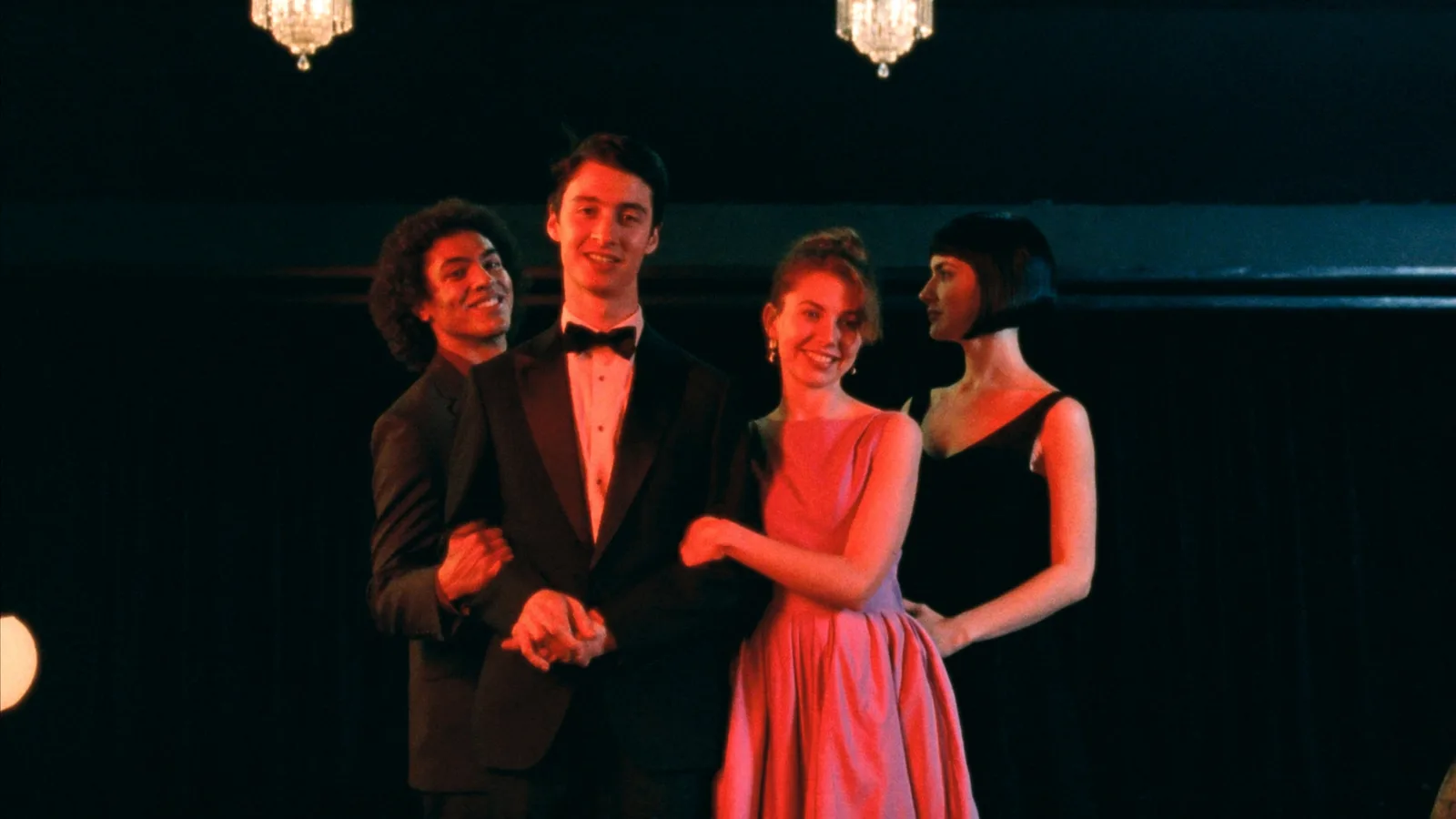
This isn't about love. Not at all.
A lavender marriage is when a man and a woman marry not because they want to be together, but because they both want society to finally leave them alone. One or both partners are LGBTQ+ — and not for money or a visa. It's so they can simply live without explaining to their mother, their boss, journalists, and passing acquaintances who they sleep with. It sounds like something out of our neurotic present. But the mechanics were invented back when the word "LGBTQ+" didn't exist yet.
What is a lavender marriage
A lavender marriage (sometimes called a lavender wedding) is a type of marriage of convenience in which at least one spouse is hiding their sexual orientation. From the outside it's an ordinary couple: a wedding, a shared home, a stamp in the passport. What makes it lavender is the reason it exists.
Old Hollywood was a beautiful prison. A studio contract included a morality clause — a vague phrase that could be stretched to mean almost anything. If word leaked to the tabloids that an on-screen tough guy or a femme fatale preferred their own sex, the career ended in scandal, fast and shamefully — or slowly and quietly, which was far worse. Everyone knew and no one said it. Inside that system of silence, the way out was invented: a gay man and a lesbian married. To the press, the perfect couple. At home, two people with a shared survival contract and, if they were lucky, real friendship.
Lavender marriage: famous examples
Rock Hudson is the most famous example. A 1950s sex symbol, the face of Universal Pictures, on the cover of every women's magazine. In 1955, the scandal sheet Confidential nearly got to the truth. His agent reacted fast: he married Hudson to Phyllis Gates — his own manager's secretary. The public relaxed, and the studio kept contracts worth several million. Gates later claimed she hadn't known about his orientation. Or pretended not to.
Before Hudson there was Alla Nazimova — an actress with a thick Russian accent and a reputation half of Hollywood envied. From 1912 to 1925 she was in a lavender relationship with the British actor Charles Bryant. A good example of an unofficial lavender union.
There was also Janet Gaynor — the first-ever Oscar winner, who in 1939 married Adrian, MGM's head costume designer. Within the film community his orientation was no secret; he was open. The union lasted 20 years, until the designer's death. Both, by all accounts, genuinely cherished each other and shared a deep emotional bond. So much so that they had a child.
These weren't marriages of miserable people, but rather pragmatic alliances between like-minded partners who understood the rules of the game and agreed to play together. But that reading is always a simplification. We don't know, and probably never will, what went on behind closed doors. Gates left no public diaries; Nazimova didn't record her feelings. The "pragmatic partnership" version is convenient, logical, and tidy — which is exactly why it deserves suspicion. Behind Hollywood's beautiful façade there may well have been deep unhappiness, who knows. It's just that back then, that unhappiness had no legal alternative.
Why is it called a lavender marriage
Why lavender? In the first half of the 20th century the color was an unspoken code of queer culture — exactly how that happened, historians still argue. The name stuck to these marriages on its own. Pretty, legible only to insiders, not too visible to outsiders.
Lavender marriage vs marriage of convenience, beard, and companionate marriage
Just don't confuse a lavender marriage with three neighboring concepts — they're close, but not the same.
| Format | What it is | Core motive |
|---|---|---|
| Lavender marriage | A marriage that hides the orientation of one or both partners | Conceal a queer identity, protect reputation |
| Marriage of convenience | A marriage for practical gain | Money, property, papers, status |
| Beard (cover relationship) | A queer person uses an unaware partner as a "shield" | The appearance of normality — one-sided |
| Companionate marriage | A union built on friendship and comfort, without passion | Warmth, domestic ease, fatigue with the romance act |
A marriage of convenience is pure commerce, the kind that runs through all of human history. A surname becomes an asset, a joint mortgage becomes insurance, a partner's passport becomes a tool. Feelings aren't out of place because they're forbidden, but because they're an obstacle to the deal. Everyone simply knows why they're there, and that knowledge can turn the stomach — but the signature goes on the documents anyway.
A beard (cover relationship) is a far stickier story. A queer person uses someone who isn't in on it as a living shield, a prop for normality. One wins the right to breathe; the other doesn't even suspect they're being deceived.
And what if both are just tired? Tired of the endless performance of fake passion. A companionate marriage is a surrender to that exhaustion. A shared fridge, quiet evenings, no "where were you?" questions. Sometimes friendship and honest convenience turn out to be firmer and more valuable than the typical rom-com.
A lavender marriage is a strategy. Both know the rules, both chose the façade. Behind it there's no emptiness — there's a shared resistance to society. The only way to stop justifying yourself to every passerby. Inside, closeness is built on the right not to be yourself in front of everyone. Outside, everything looks just like everyone else's. It's essentially the same compulsory heterosexuality — only formalized with a stamp in the passport.
Lavender marriages today: why the term came back
You'd think — why any of this now? The studio system is dead. Same-sex marriage is legal in dozens of countries. There's no need to hide.
And yet on Reddit it's being discussed. Actively, in fresh posts, with no sense that the topic is closed. Only the meaning is different. Today a lavender marriage is more about the transparency of the rules of the game. A way to stop lying to yourself and your partner. Alongside it, other formats that used to be swept under the rug come up in the same conversation: ethical non-monogamy, the situationship, open-minded dating with no labels.
We carried that directness into dating. Everyone's pretty tired of the guessing game. It doesn't matter what you need right now: sex for one night, company on a trip, or someone for shared breakfasts. The problem isn't the desires — it's how we hide them behind awkward hints, afraid of looking like the wrong kind of person. Flava is a space where settling things upfront isn't strange — it's the price of admission. We're not here to slap on labels, but to clear out the noise and the things left unsaid. You pick the format that fits you and head for it. No "we'll see," no extra drama. You just understand that the other person is looking for exactly the same thing. Honestly and right away.
Want it that way — honest, no façade? Download Flava and see how it works.
Frequently Asked Questions
Why is it called a lavender marriage? In the first half of the 20th century, lavender was an unspoken color code of queer culture. So a marriage that hid the orientation of one or both spouses came to be called a lavender marriage — pretty, legible to insiders, and unremarkable to outsiders.
Is a lavender marriage the same as a marriage of convenience? Not exactly. Every lavender marriage is a kind of marriage of convenience, but not the other way around. A marriage of convenience can be for papers, residency, or money. A lavender marriage is entered specifically to conceal sexual orientation.
Who was Rock Hudson, and what's the connection? Rock Hudson was a 1950s Hollywood sex symbol. In 1955, when Confidential magazine closed in on rumors about his homosexuality, his agent quickly married him to Phyllis Gates. It's the most famous documented example of a lavender marriage.
Do lavender marriages still happen today? Yes — especially where being openly LGBTQ+ is still unsafe or shameful. The term has also broadened: today it's often used for any pragmatic union built for the façade, even one unrelated to orientation.
Do both partners usually know it's a lavender marriage? Often, yes. Many lavender marriages are mutual: both understand the rules and cover for each other. But sometimes only one spouse knows the real motive.
Keep reading
- What is compulsory heterosexuality (comphet)? — the "be like everyone else" pressure lavender marriages grew out of
- What is ethical non-monogamy (ENM)? — the honest, agreement-first alternative to concealment
- What is a situationship? — a relationship with no definition and no labels
- Open-minded dating with no labels in 2026 — what honest dating looks like today
- The complete casual dating guide 2026 — the full map of modern relationship formats
Sources
- Rock Hudson — Wikipedia — biography and his marriage to Phyllis Gates
- Adrian (costume designer) — Wikipedia — on his marriage to Janet Gaynor
- Alla Nazimova and Charles Bryant — research on the lavender union
- Marriage of convenience — Wikipedia — on marriages of convenience
- Beard (companion) — Wikipedia — on cover relationships